Sunday, February 21, 2016

Stanford University


     Stanford University, officially Leland Stanford Junior University,is a private research university in Stanford, California, and one of the world's most prestigious institutions.

Stanford was founded in 1885 by Leland Stanford, former Governor of and U.S. Senator from California and leading railroad tycoon, and his wife, Jane Lathrop Stanford, in memory of their only child, Leland Stanford, Jr., who had died of typhoid fever at age 15 the previous year. Stanford admitted its first students on October 1, 1891 as a coeducational and non-denominational institution. Tuition was free until 1920.The university struggled financially after Leland Stanford's 1893 death and again after much of the campus was damaged by the 1906 San Francisco earthquake.Following World War II, Provost Frederick Terman supported faculty and graduates' entrepreneurialism to build self-sufficient local industry in what would later be known as Silicon Valley. By 1970, Stanford was home to a linear accelerator, and was one of the original four ARPANET nodes.

The main campus is in northern Santa Clara Valley adjacent to Palo Alto and between San Jose and San Francisco. Stanford also has land and facilities elsewhere. Its 8,180-acre (3,310 ha)campus is one of the largest in the United States.The university is also one of the top fundraising institutions in the country, becoming the first school to raise more than a billion dollars in a year.

Stanford's academic strength is broad with 40 departments in the three academic schools that have undergraduate students and another four professional schools. Students compete in 36 varsity sports, and the university is one of two private institutions in the Division I FBS Pac-12 Conference. It has gained 108 NCAA team championships,the second-most for a university, 476 individual championships, the most in Division I,and has won the NACDA Directors' Cup, recognizing the university with the best overall athletic team achievement, every year since 1994-1995.

Stanford faculty and alumni have founded many companies including Google, Hewlett-Packard, Nike, Sun Microsystems, Instagram, Snapchat, and Yahoo!, and companies founded by Stanford alumni generate more than $2.7 trillion in annual revenue, equivalent to the 10th-largest economy in the world.It is the alma mater of 30 living billionaires, 17 astronauts, and 18 Turing Award laureates.It is also one of the leading producers of members of the United States Congress.The University has affiliated with 60 Nobel laureates[citation needed] and 2 Fields Medalists (when awarded).

Stanford was founded by Leland Stanford, a railroad magnate, U.S. senator, and former California governor, together with his wife, Jane Lathrop Stanford. It is named in honor of their only child, Leland Stanford, Jr., who died in 1884 from typhoid fever just before his 16th birthday. His parents decided to dedicate a university to their only son, and Leland Stanford told his wife, "The children of California shall be our children."The Stanfords visited Harvard's president, Charles Eliot, and asked whether he should establish a university, technical school or museum. Eliot replied that he should found a university and an endowment of $5 million would suffice (in 1884 dollars; about $132 million today.

The university's Founding Grant of Endowment from the Stanfords was issued in November 1885. Besides defining the operational structure of the university, it made several specific stipulations:

Despite the duty to have a co-educational institution in 1899 Jane Stanford, the remaining Founder, added to the Founding Grant the legal requirement that "the number of women attending the University as students shall at no time ever exceed five hundred". She feared the large numbers of women entering would lead the school to become "the Vassar of the West" and felt that would not be an appropriate memorial for her son. In 1933 the requirement was reinterpreted by the trustees to specify an undergraduate male:female ratio of 3:1.The "Stanford ratio" of 3:1 remained in place until the early 1960s. By the late 1960s the "ratio" was about 2:1 for undergraduates, but much more skewed at the graduate level, except in the humanities. In 1973 the University trustees successfully petitioned the courts to have the restriction formally removed. As of 2014 the undergraduate enrollment is split nearly evenly between the sexes (47.2% women, 52.8% men), though males outnumber females (38.2% women, 61.8% men) at the graduate level.In the same petition they also removed the prohibition of sectarian worship on campus (previous only non-denominational Christian worship in Stanford Memorial Church was permitted).

In the early 1990s, Stanford was investigated by the U.S. government over allegations that the university had inappropriately billed the government several million dollars for housing, personal expenses, travel, entertainment, fundraising and other activities unrelated to research, including a yacht and an elaborate wedding ceremony.The scandal eventually led to the resignation of Stanford President Donald Kennedy in 1992.In an agreement with the Office of Naval Research, Stanford refunded $1.35 million to the government for billing which occurred in the years 1981 and 1992. Additionally, the government reduced Stanford's annual research budget by $23 million in the year following the settlement.

Most of Stanford University is on an 8,180-acre (3,310 ha)[campus on the San Francisco Peninsula, in the northwest part of the Santa Clara Valley (Silicon Valley) approximately 37 miles (60 km) southeast of San Francisco and approximately 20 miles (32 km) northwest of San Jose; this is the founding grant. In 2008, 60% of this land remained undeveloped.Besides the central campus described below, the university also operates at several more remote locations, some elsewhere on the main campus, some further afield (see below).

Stanford's main campus includes a census-designated place within unincorporated Santa Clara County, although some of the university land (such as the Stanford Shopping Center and the Stanford Research Park) is within the city limits of Palo Alto. The campus also includes much land in unincorporated San Mateo County (including the SLAC National Accelerator Laboratory and the Jasper Ridge Biological Preserve), as well as in the city limits of Menlo Park (Stanford Hills neighborhood), Woodside, and Portola Valley.

Stanford University is a tax-exempt corporate trust governed by a privately appointed 34-member Board of Trustees.Trustees serve five-year terms (not more than two consecutive terms) and meet five times annually.A new trustee is chosen by the remaining Trustees by ballot.The Stanford trustees also oversee the Stanford Research Park, the Stanford Shopping Center, the Cantor Center for Visual Arts, Stanford University Medical Center, and many associated medical facilities (including the Lucile Packard Children's Hospital).

The Board appoints a President to serve as the chief executive officer of the university and prescribe the duties of professors and course of study, manage financial and business affairs, and appoint nine vice presidents.The Provost is the chief academic and budget officer, to whom the deans of each of the seven schools report.John Etchemendy was named the 12th Provost in September 2000.

The University is currently organized into seven academic schools.The schools of Humanities and Sciences (27 departments), Engineering (9 departments), and Earth, Energy & Environmental Sciences (4 departments) have both graduate and undergraduate programs while the Schools of Law, Medicine, Education and Business have graduate programs only. The powers and authority of the faculty are vested in the Academic Council, which is made up of tenure and non-tenure line faculty, research faculty, senior fellows in some policy centers and institutes, the president of the university, and some other academic administrators, but most matters are handled by the Faculty Senate, made up of 55 elected representatives of the faculty.

Friday, February 19, 2016

Arizona State University

 
Arizona State University (commonly referred to as ASU or Arizona State) is a public flagship metropolitan research university located on five campuses across the Phoenix, Arizona, metropolitan area,and four regional learning centers throughout Arizona. The 2016 university ratings by U.S. News & World Report rank ASU No. 1 among the Most Innovative Schools in America.

ASU is the largest public university by enrollment in the U.S.It has approximately 82,060 students enrolled in the year 2014 including 66,309 undergraduate and 15,751 graduate students.ASU's charter, approved by the board of regents in 2014, is based on the "New American University" model created by ASU President Crow. It defines ASU as "a comprehensive public research university, measured not by whom it excludes, but rather by whom it includes and how they succeed; advancing research and discovery of public value; and assuming fundamental responsibility for the economic, social, cultural and overall health of the communities it serves."

ASU is classified as a research university with very high research activity (RU/VH) by the Carnegie Classification of Institutions of Higher Education. Since 2005 ASU has been ranked among the top research universities, public and private, in the U.S. based on research output, innovation, development, research expenditures, number of awarded patents and awarded research grant proposals. The Center for Measuring University Performance currently ranks ASU 31st among top U.S. public research universities.ASU was classified as a Research I institute in 1994, making it one of the newest major research universities (public or private) in the nation.

Students compete in 25 varsity sports.The Arizona State Sun Devils are members of the Pac-12 Conference and have won 23 NCAA championships. Along with multiple athletic clubs and recreational facilities, ASU is home to more than 1,100 registered student organizations, reflecting the diversity of the student body.To keep pace with the growth of the student population, the university is continuously renovating and expanding infrastructure. The demand for new academic halls, athletic facilities, student recreation centers, and residential halls is being addressed with donor contributions and public-private investments.

Arizona State University was established as the Territorial Normal School at Tempe on March 12, 1885, when the 13th Arizona Territorial Legislature passed an act to create a normal school to train teachers for the Arizona Territory. The campus consisted of a single, four-room schoolhouse on a 20-acre plot largely donated by Tempe residents George and Martha Wilson. Classes began with 33 students on February 8, 1886. The curriculum evolved over the years and the name was changed several times; the institution was also known as Arizona Territorial Normal School (1889–1896), Arizona Normal School (1896–1899), Normal School of Arizona (1899–1901), and Tempe Normal School (1901–1925). The school accepted both high school students and graduates, and awarded high school diplomas and teaching certificates to those who completed the requirements.

In 1923 the school stopped offering high school courses and added a high school diploma to the admissions requirements. In 1925 the school became the Tempe State Teachers College and offered four-year Bachelor of Education degrees as well as two-year teaching certificates. In 1929, the legislature authorized Bachelor of Arts in Education degrees as well, and the school was renamed the Arizona State Teachers College.Under the 30-year tenure of president Arthur John Matthews the school was given all-college student status. The first dormitories built in the state were constructed under his supervision. Of the 18 buildings constructed while Matthews was president, six are still currently in use. Matthews envisioned an "evergreen campus," with many shrubs brought to the campus, and implemented the planting of Palm Walk, now a landmark of the Tempe campus. His legacy is being continued to this day with the main campus having been declared a nationally recognized arboretum.

In 1933, Grady Gammage, then president of Arizona State Teachers College at Flagstaff, became president of ASU, a tenure that would last for nearly 28 years. Like his predecessor, Gammage oversaw construction of a number of buildings on the Tempe campus. He also oversaw the development of the university, graduate programs. The school's name was changed to Arizona State College in 1945, and finally to Arizona State University in 1958.

By the 1960s, with the presidency of G. Homer Durham, the University began to expand its academic curriculum by establishing several new colleges and beginning to award Doctor of Philosophy and other doctoral degrees.

The next three presidents—Harry K. Newburn, 1969–71, John W. Schwada, 1971–81, and J. Russell Nelson, 1981–89—and Interim President Richard Peck, 1989, led the university to increased academic stature, creation of the West campus, and rising enrollment.

Under the leadership of Lattie F. Coor, president from 1990 to 2002, ASU grew through the creation of the Polytechnic campus and extended education sites. Increased commitment to diversity, quality in undergraduate education, research, and economic development occurred over his 12-year tenure. Part of Coor's legacy to the university was a successful fundraising campaign: through private donations, more than $500 million was invested in areas that would significantly impact the future of ASU. Among the campaign's achievements were the naming and endowing of Barrett, The Honors College, and the Herberger Institute for Design and the Arts; the creation of many new endowed faculty positions; and hundreds of new scholarships and fellowships.

In 2002, Michael M. Crow became the university's 16th president. At his inauguration, he outlined his vision for transforming ASU into a "New American University" — one that would be open and inclusive, and set a goal for the university to meet Association of American Universities criteria and to become a member.Crow initiated the idea of transforming ASU into "One university in many places" — a single institution comprising several campuses, sharing students, faculty, staff and accreditation. Subsequent reorganizations combined academic departments, consolidated colleges and schools, and reduced staff and administration as the university expanded its West and Polytechnic campuses. ASU's Downtown Phoenix campus was also expanded, with several colleges and schools relocating there. The university established learning centers throughout the state, including the ASU Colleges at Lake Havasu City and programs in Thatcher, Yuma, and Tucson. Students at these centers can choose from several ASU degree and certificate programs.

Saturday, November 21, 2015

University of California


   The University of California, Riverside (UCR or UC Riverside), is a public research university and one of the 10 general campuses of the University of California system. The main campus sits on 1,900 acres (769 ha) in a suburban district of Riverside, California, United States, with a branch campus of 20 acres (8 ha) in Palm Desert. Founded in 1907 as the UC Citrus Experiment Station, Riverside pioneered research in biological pest control and the use of growth regulators responsible for extending the citrus growing season in California from four to nine months. Some of the world's most important research collections on citrus diversity and entomology, as well as science fiction and photography, are located at Riverside.

UCR's undergraduate College of Letters and Science opened in 1954. The Regents of the University of California declared UCR a general campus of the system in 1959, and graduate students were admitted in 1961. To accommodate an enrollment of 21,000 students by 2015, more than $730 million has been invested in new construction projects since 1999.Preliminary accreditation of the UCR School of Medicine was granted in October 2012 and the first class of 50 students was enrolled in August 2013. It is the first new research-based public medical school in 40 years.

UCR is consistently ranked as one of the most ethnically and economically diverse universities in the United States.The 2016 U.S. News & World Report Best Colleges rankings places UCR tied for 58th among top public universities, tied for 121st nationwide and ranks 16+ graduate school programs including the Graduate School of Education and the Bourns College of Engineering based on peer assessment, student selectivity, financial resources, and other factors.Washington Monthly ranked UCR 2nd in the United States in terms of social mobility, research and community service,while U.S. News ranks UCR as the fifth most ethnically diverse and, by the number of undergraduates receiving Pell Grants (42 percent), the 15th most economically diverse student body in the nation.Nearly two-thirds of all UCR students graduate within six years without regard to economic disparity.UCR's extensive outreach and retention programs have contributed to its reputation as a "campus of choice" for minority students, including LGBT students.In 2005, UCR became the first public university campus in the nation to offer a gender-neutral housing option.

At the turn of the 20th century, Southern California was a major producer of citrus, the region's primary agricultural export. The industry developed from the country's first navel orange trees, planted in Riverside in 1873. Lobbied by the citrus industry, the UC Regents established the UC Citrus Experiment Station (CES) on February 14, 1907, on 23 acres (9 ha) of land on the east slope of Mount Rubidoux in Riverside. The station conducted experiments in fertilization, irrigation and crop improvement. In 1917, the station was moved to a larger site, 475 acres (192 ha) near Box Springs Mountain.

The 1944 passage of the GI Bill during World War II set in motion a rise in college enrollments that necessitated an expansion of the state university system in California. A local group of citrus growers and civic leaders, including many UC Berkeley alumni, lobbied aggressively for a UC-administered liberal arts college next to the CES. State Senator Nelson Dilworth, former Assemblyman Philip L. Boyd and Riverside State Assemblyman John Babbage were instrumental in shepherding the legislation through the State Legislature.Governor Earl Warren signed the bill in 1949, allocating $2 million for initial campus construction.

Gordon S. Watkins, dean of the College of Letters and Science at UCLA, became the first provost of the new college at Riverside. Initially conceived of as a small college devoted to the liberal arts, he ordered the campus built for a maximum of 1,500 students and recruited many young junior faculty to fill teaching positions.He presided at its opening with 65 faculty and 127 students on February 14, 1954, remarking, "Never have so few been taught by so many.

UCR's enrollment exceeded 1,000 students by the time Clark Kerr became president of the UC system in 1958.Anticipating a "tidal wave" in enrollment growth required by the baby boom generation, Kerr developed the California Master Plan for Higher Education and the Regents designated Riverside a general university campus in 1959.UCR's first chancellor, Herman Theodore Spieth, oversaw the beginnings of the school's transition to a full university and its expansion to a capacity of 5,000 students. UCR's second chancellor, Ivan Hinderaker led the campus through the era of the free speech movement and kept student protests peaceful in Riverside.According to a 1998 interview with Hinderaker, the city of Riverside received negative press coverage for smog after the mayor asked Governor Ronald Reagan to declare the South Coast Air Basin a disaster area in 1971; subsequent student enrollment declined by up to 25% through Hinderaker's development of innovative programs in business administration and biomedical sciences created incentive for enough students to enroll at Riverside to keep the campus open.

East Campus, occupying approximately 600 acres (243 ha), hosts the core cluster of academic buildings and services. The original buildings that formed the earliest kernel of the campus included the UC Citrus Experiment Station, residential buildings, and barn, all of which are still in use. They were designed by Lester H. Hibbard, in association with H.B. Cody. Built by 1917 at a cost of $165,000, the architecture of the major buildings followed the Mission Revival style suggesting the Spanish colonial heritage of Southern California.

Further major construction largely ceased on the site until the groundbreaking for the College of Letters and Science (CHASS) in April 1951. A group of five buildings designed by different architects in a decidedly more Modern style were completed by 1954: the Rivera Library, Webber Hall, Geology Building, Physical Education Building and Watkins Hall. After the Regents declared UCR a "general campus" of the UC system in 1958, many new buildings and additions were laid out over the following decade. Following an east–west axis, new student residence halls and athletic facilities were developed along the southeastern quadrant of the main campus, while academic and research facilities were built along the central campus area closer to the freeway.The Bell Tower, one of only five carillons in California, was built in this period. Designed by A. Quincy Jones, the tower is 161 ft (49 m) tall and contains 48 bells, each weighing from 28 pounds (13 kg) to 5,091 pounds (2,309 kg), covering four chromatic octaves.

After the drop in enrollment and subsequent restructuring of academic programs in the 1970s, little capacity construction was undertaken over the next two decades. However, enrollment growth in the late 1980s justified considerable further campus expansion over the 1990s. Major additions built in the period include: Bourns Hall, completed in 1995; the Humanities & Social Science building, completed in 1996; and the Science Library, completed in 1998. The Pentland and Stonehaven residence halls were completed in 2000, and the Arts building was completed in 2001.Active construction projects include new buildings for Engineering and Materials Science, Psychology Research, and Genomics.The first phase of a new Commons was completed in 2007, and phase II is in development. Other ongoing projects include a new CHASS Instructional and Research Center and Students Academic Support Services Building.Since 1999, more than $730 million has been invested in construction projects.

The University of California, Riverside, has recently united its three downtown arts presentation venues under the umbrella name of the UCR ARTSblock. The ARTSblock is composed of the UCR/California Museum of Photography, The Sweeney Art Gallery, and the Culver Center of the Arts, a media lab and presentation facility. The three institutions reside side by side in the heart of downtown Riverside's historic pedestrian mall.

As a campus of the University of California system, UCR is governed by a Board of Regents and administered by a president. The current president is Janet Napolitano, and the administrative head of UCR is Kim Wilcox. UCR's academic policies are set by its Academic Senate, a legislative body composed of all UCR faculty members.

UCR is organized into four academic colleges, two professional schools, and several interdisciplinary divisions. UCR's liberal arts college, the College of Humanities, Arts and Social Sciences, was founded in 1954, and began accepting graduate students in 1960. The College of Natural and Agricultural Sciences, founded in 1960, incorporated the CES as part of the first research-oriented institution at UCR; it eventually also incorporated the natural science departments formerly associated with the liberal arts college to form its present structure in 1974.UCR's newest academic unit, the Bourns College of Engineering, was founded in 1989.Comprising the professional schools are the Graduate School of Education, founded in 1968, and the UCR School of Business Administration, founded in 1970.These units collectively provide 81 majors and 52 minors, 48 master's degree programs, and 42 Doctor of Philosophy (PhD) programs.UCR is the only UC campus to offer undergraduate degrees in creative writing and public policy and one of three UCs (along with Berkeley and Irvine) to offer an undergraduate degree in business administration.Through its Division of Biomedical Sciences, founded in 1974, UCR offers the Thomas Haider medical degree program in collaboration with UCLA.UCR's doctoral program in the emerging field of dance theory, founded in 1992, was the first program of its kind in the United States, and UCR's minor in lesbian, gay and bisexual studies, established in 1996, was the first undergraduate program of its kind in the UC system.A new BA program in bagpipes was inaugurated in 2007.

Tuesday, November 3, 2015

University of Michigan

  The University of Michigan (U-M, UM, UMich, or U of M), frequently referred to simply as Michigan, is a public research university located in Ann Arbor, Michigan, United States. Originally, founded in 1817 in Detroit as the Catholepistemiad, or University of Michigania, 20 years before the Michigan Territory officially became a state, the University of Michigan is the state's oldest university. The university moved to Ann Arbor in 1837 onto 40 acres (16 ha) of what is now known as Central Campus. Since its establishment in Ann Arbor, the university campus has expanded to include more than 584 major buildings with a combined area of more than 34 million gross square feet (781 acres or 3.16 km²), and has two satellite campuses located in Flint and Dearborn.The University was one of the founding members of the Association of American Universities.
  
Considered one of the foremost research universities in the United States, the university has very high research activity and its comprehensive graduate program offers doctoral degrees in the humanities, social sciences, and STEM fields (Science, Technology, Engineering and Mathematics) as well as professional degrees in business, medicine, law, pharmacy, nursing, social work and dentistry. Michigan's body of living alumni (as of 2012) comprises more than 500,000. Besides academic life, Michigan's athletic teams compete in Division I of the NCAA and are collectively known as the Wolverines. They are members of the Big Ten Confere
 The University of Michigan was established in Detroit in 1817 as the Catholepistemiad, or University of Michigania, by the governor and judges of Michigan Territory. The Rev. John Monteith was one of the university's founders and its first President. Ann Arbor had set aside 40 acres (16 ha) in the hopes of being selected as the state capital; when Lansing was chosen as the state capital, the city offered the land for a university. What would become the university moved to Ann Arbor in 1837 thanks to Governor Stevens T. Mason. The original 40 acres (160,000 m2) was the basis of the current Central Campus.The first classes in Ann Arbor were held in 1841, with six freshmen and a sophomore, taught by two professors. Eleven students graduated in the first commencement in 1845.
 
By 1866, enrollment increased to 1,205 students, many of whom were Civil War veterans. Women were first admitted in 1870.James Burrill Angell, who served as the university's president from 1871 to 1909, aggressively expanded U-M's curriculum to include professional studies in dentistry, architecture, engineering, government, and medicine. U-M also became the first American university to use the seminar method of study. Among the early students in the School of Medicine was Jose Celso Barbosa, who in 1880 graduated as valedictorian and the first Puerto Rican to get a university degree in the United States. He returned to Puerto Rico to practice medicine and also served in high-ranking posts in the government.

From 1900 to 1920, the university constructed many new facilities, including buildings for the dental and pharmacy programs, chemistry, natural sciences, Hill Auditorium, large hospital and library complexes, and two residence halls. In 1920 the university reorganized the College of Engineering and formed an advisory committee of 100 industrialists to guide academic research initiatives. The university became a favored choice for bright Jewish students from New York in the 1920s and 1930s, when the Ivy League schools had quotas restricting the number of Jews to be admitted.Because of its high standards, U-M gained the nickname "Harvard of the West," which became commonly parodied in reverse after John F. Kennedy referred to himself as "a graduate of the Michigan of the East, Harvard University" in his speech proposing the formation of the Peace Corps while on the front steps of the Michigan Union.During World War II, U-M's research supported military efforts, such as U.S. Navy projects in proximity fuzes, PT boats, and radar jamming.

Tuesday, August 25, 2015

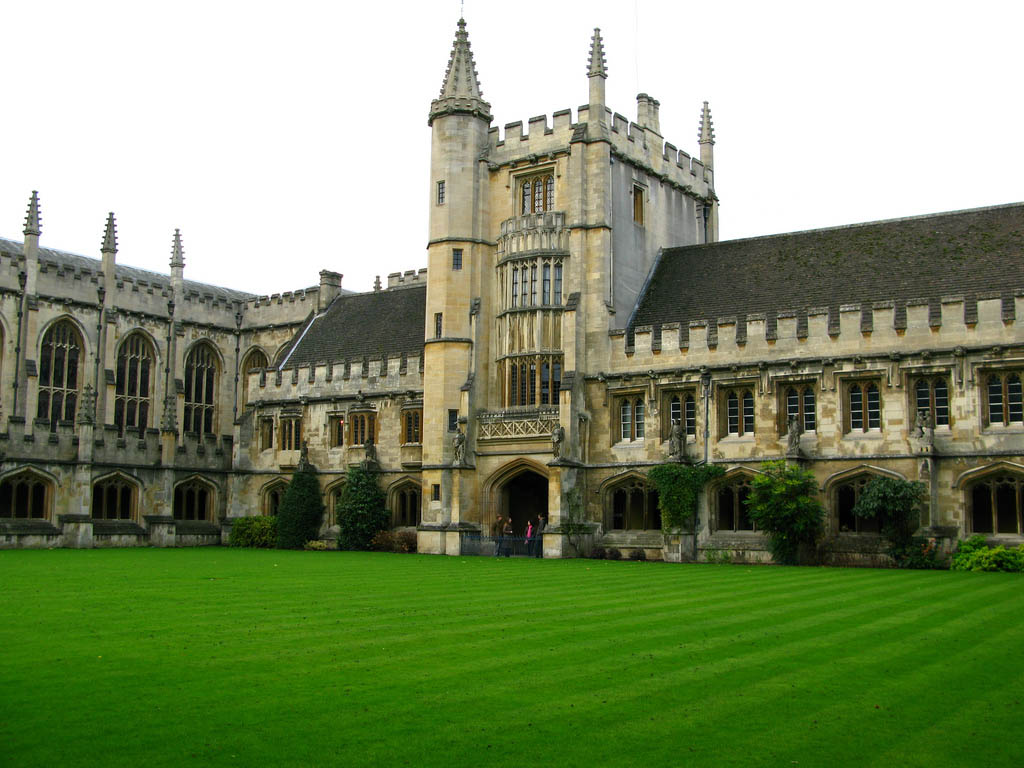
University of Oxford

     The University of Oxford (informally Oxford University or simply Oxford) is a collegiate research university located in Oxford, England. While having no known date of foundation, there is evidence of teaching as far back as 1096,making it the oldest university in the English-speaking world and the world's second-oldest surviving university.It grew rapidly from 1167 when Henry II banned English students from attending the University of Paris.After disputes between students and Oxford townsfolk in 1209, some academics fled northeast to Cambridge where they established what became the University of Cambridge.the two "ancient universities" are frequently jointly referred to as "Oxbridge".

The university is made up of a variety of institutions, including 38 constituent colleges and a full range of academic departments which are organised into four divisions.All the colleges are self-governing institutions as part of the university, each controlling its own membership and with its own internal structure and activities.Being a city university, it does not have a main campus; instead, all the buildings and facilities are scattered throughout the city centre.

Most undergraduate teaching at Oxford is organised around weekly tutorials at the self-governing colleges and halls, supported by classes, lectures and laboratory work provided by university faculties and departments. Oxford is the home of several notable scholarships, including the Clarendon Scholarship which was launched in 2001and the Rhodes Scholarship which has brought graduate students to study at the university for more than a century.The university operates the largest university press in the world and the largest academic library system in the United Kingdom.Oxford has educated many notable alumni, including 27 Nobel laureates, 26 British prime ministers and many foreign heads of state.

The University of Oxford has no known foundation date.Teaching at Oxford existed in some form as early as 1096, but it is unclear when a university came into being.It grew quickly in 1167 when English students returned from the University of Paris.The historian Gerald of Wales lectured to such scholars in 1188 and the first known foreign scholar, Emo of Friesland, arrived in 1190. The head of the university was named a chancellor from at least 1201 and the masters were recognised as a universitas or corporation in 1231. The university was granted a royal charter in 1248 during the reign of King Henry III.After disputes between students and Oxford townsfolk in 1209, some academics fled from the violence to Cambridge, later forming the University of Cambridge.

The students associated together on the basis of geographical origins, into two "nations", representing the North (Northern or Boreales, which included the English people north of the River Trent and the Scots) and the South (Southern or Australes, which included English people south of the Trent, the Irish and the Welsh).In later centuries, geographical origins continued to influence many students' affiliations when membership of a college or hall became customary in Oxford. In addition to this, members of many religious orders, including Dominicans, Franciscans, Carmelites and Augustinians, settled in Oxford in the mid-13th century, gained influence and maintained houses or halls for students.At about the same time, private benefactors established colleges to serve as self-contained scholarly communities. Among the earliest such founders were William of Durham, who in 1249 endowed University College, and John Balliol, father of a future King of Scots; Balliol College bears his name.Another founder, Walter de Merton, a Lord Chancellor of England and afterwards Bishop of Rochester, devised a series of regulations for college life;Merton College thereby became the model for such establishments at Oxford, as well as at the University of Cambridge. Thereafter, an increasing number of students forsook living in halls and religious houses in favour of living in colleges.

The university passed a statute in 1875 allowing its delegates to create examinations for women at roughly undergraduate level.The first four women's colleges were established due to the activism of the Association for Promoting the Higher Education of Women (AEW). Lady Margaret Hall (1878) was followed by Somerville College in 1879;the first 21 students from Somerville and Lady Margaret Hall attended lectures in rooms above an Oxford baker's shop.The first two colleges for women were followed by St Hugh's (1886), St Hilda's (1893) and St Anne's College (1952).In the early 20th century, Oxford and Cambridge were widely perceived to be bastions of male privilege,however the integration of women into Oxford moved forwards during the First World War. In 1916 women were admitted as medical students on a par with men, and in 1917 the University accepted financial responsibility for women's examinations.On 7 October 1920 women became eligible for admission as full members of the university and were given the right to take degrees.In 1927 the university's dons created a quota that limited the number of female students to a quarter that of men, a ruling which was not abolished until 1957.However, before the 1970s all Oxford colleges were for men or women only, so that the number of women was limited by the capacity of the women's colleges to admit students. It was not until 1959 that the women's colleges were given full collegiate status.

In 1974, Brasenose, Jesus, Wadham, Hertford and St Catherine's became the first previously all-male colleges to admit women.

In 2008, the last single-sex college, St Hilda's, admitted its first men, so that all colleges are now co-residential. By 1988, 40% of undergraduates at Oxford were female; the ratio was about 46%:54% in men's favour for the 2012 undergraduate admission.

The detective novel Gaudy Night by Dorothy L. Sayers, herself one of the first women to gain an academic degree from Oxford, is largely set in a (fictional) women's college at Oxford, and the issue of women's education is central to its plot.